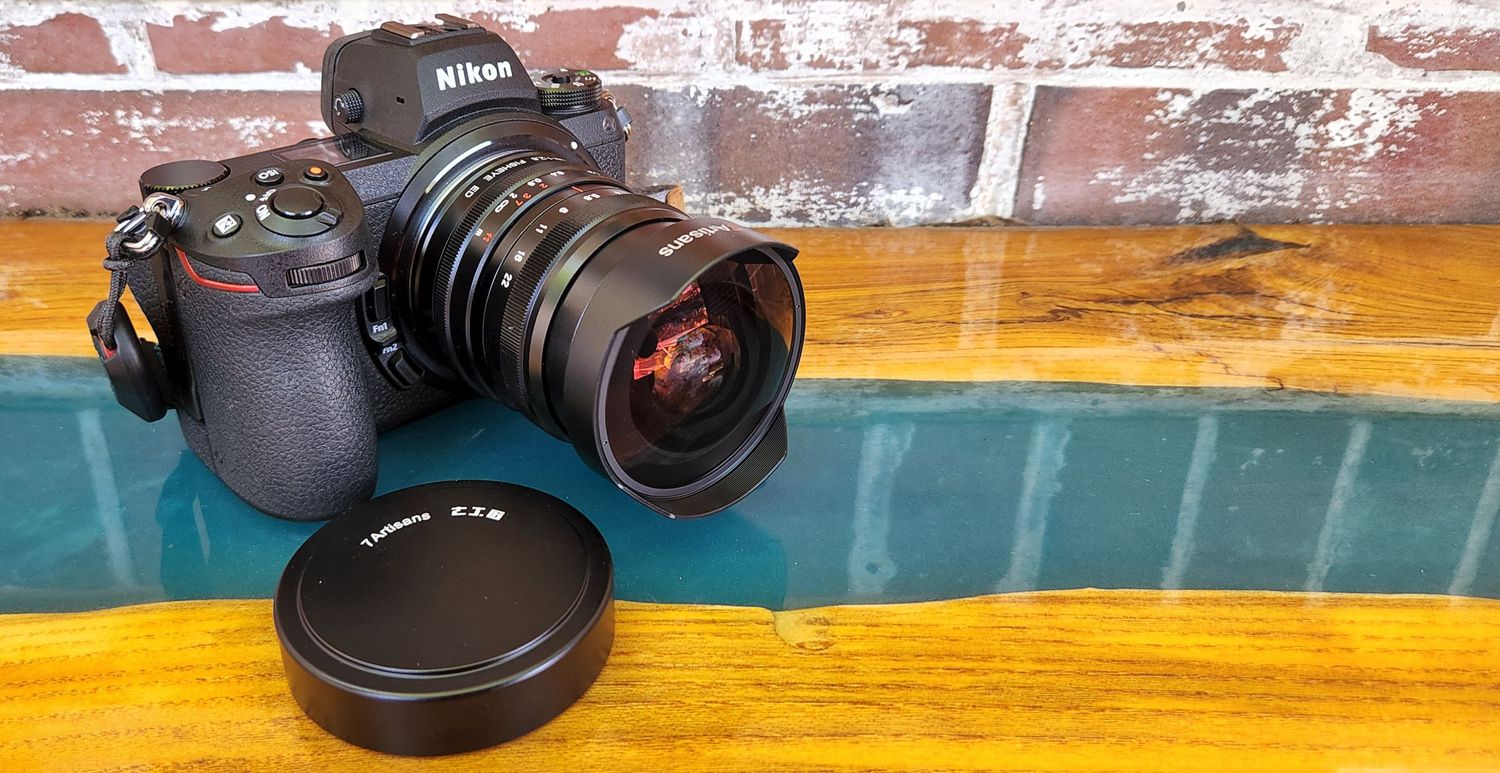
Prior to my Hawaii trip a few months ago, I acquired a fisheye lens from 7Artisans. At the time, it was a bit of an experiment. Prior to that purchase, I'd never used a 7Artisans lens. Hell, I'd never even heard of 7Artisans at that point. But, at ~US$250, for a 10mm f/2.8 I figured it was worth a checking out. As I noted in my post about my initial thoughts that lens, I was really with both the image and build quality. Sure, it's a fully manual lens but for shooting landscapes and other relatively stationary subjects that's really not an issue for me. Shooting in Hawaii served only to reinforce those thoughts and that fisheye lens has found its place in my bag.
Fast-forward a few months to when I see a 7Artisans ad showcasing a Z-Mount 35mm f/0.95 lens. I loved what I saw until I realized that it's an APS-C lens. It's true that the APS-C lens would work on my Z6II but I'd have to remember to switch out of full-frame mode. I also bought a full-frame camera for a reason so the thought of "downgrading" didn't really appeal to me. While on the site I decided to look at their other Z-mount lenses. The full-frame selection is rather limited but one of the three lenses caught my eye. It's the 35mm f/5.6 "pancake" lens.
Truth be told, I'm actually a bit embarrassed by how much I mulled over whether I'd make the purchase. At US$139, this is hardly an expensive lens. That I'd stumbled upon the lens while it was on sale for US$99 just reinforces that feeling.
Why the hesitation? Price was never really the issue. I mean, even at full price, the lens really costs as much as a few decent meals out for my family of three. I spend more on streaming services every year than this lens costs. I probably spend more on coffee than this lens was going to set me back. No, price wasn't the problem. It really came down to two questions I wrestled with:
- Would I actually use the lens? I already have more expensive lenses that cover this focal length and are more flexible.
- Was f/5.6 going to be too limiting? I generally shoot around f/8 and f/11, and only move to the larger apertures in lower light.
After reading or watching pretty much all of the reviews I could find and considering the sale price I finally gave in to temptation and bought it. Now that I've had it for a bit, I can honestly say that although the lens has a few quirks, I'm glad I bought it. Read on for my thoughts about the 7Artisans 35mm F/5.6 pancake.
In this article I'm not going to dwell on most of the lens' technical specs. That information is all available elsewhere and let's be honest, if you're reading my review, you've probably already found all of that. I'll instead share my experience actually shooting with it.
Build Quality
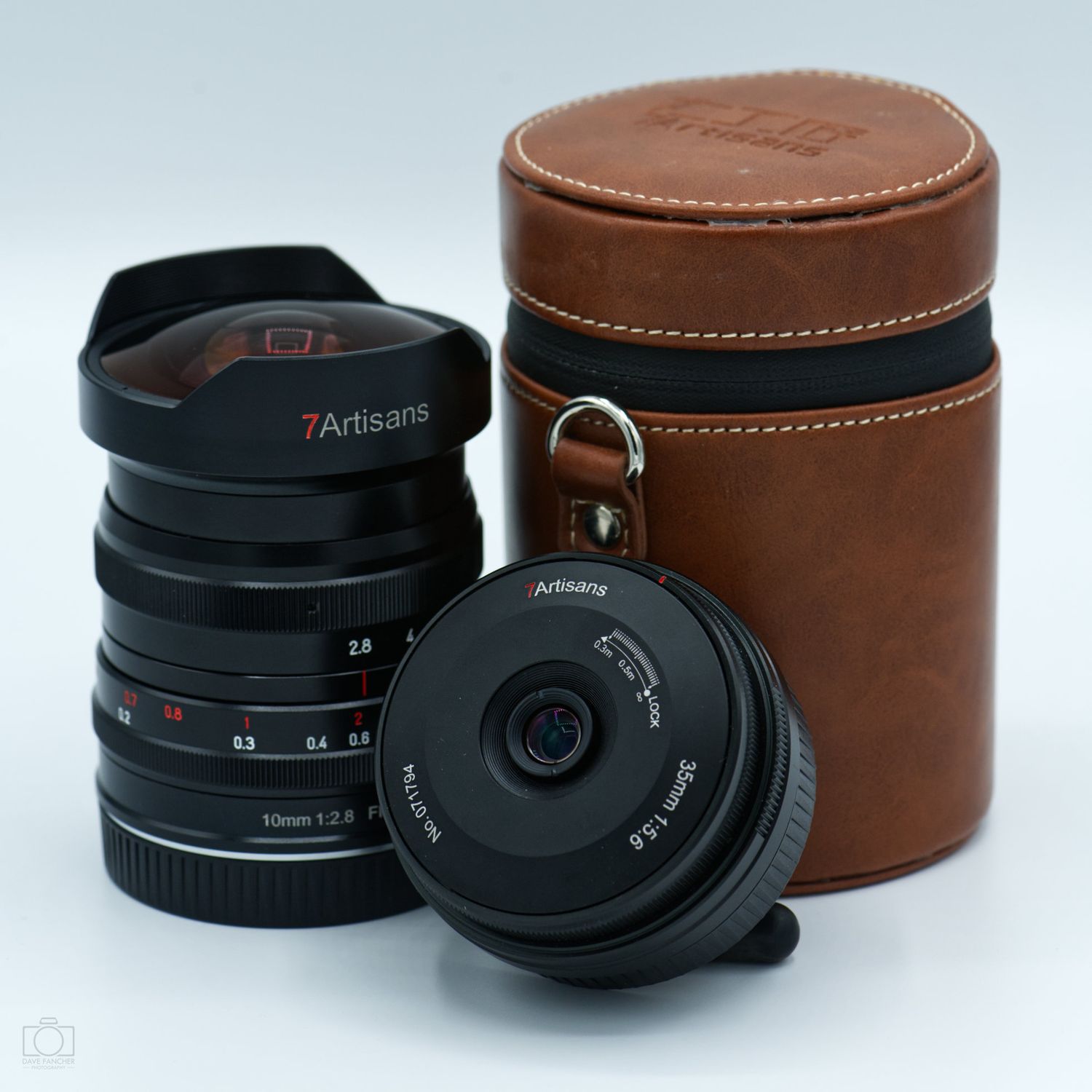
When I purchased the 7Artisans 12mm fisheye I was truly surprised at how heavy it was and how sturdy it felt. The same holds true with the 35mm pancake. The first thing I've noticed with both of my 7Artisans lenses is how heavy they are. Seriously, these things are beasts. Despite its small stature this 35mm weighs in at over a quarter of a pound. Just picking up this lens speaks volumes about its build quality. It's really impressive just how sturdy this lens is.
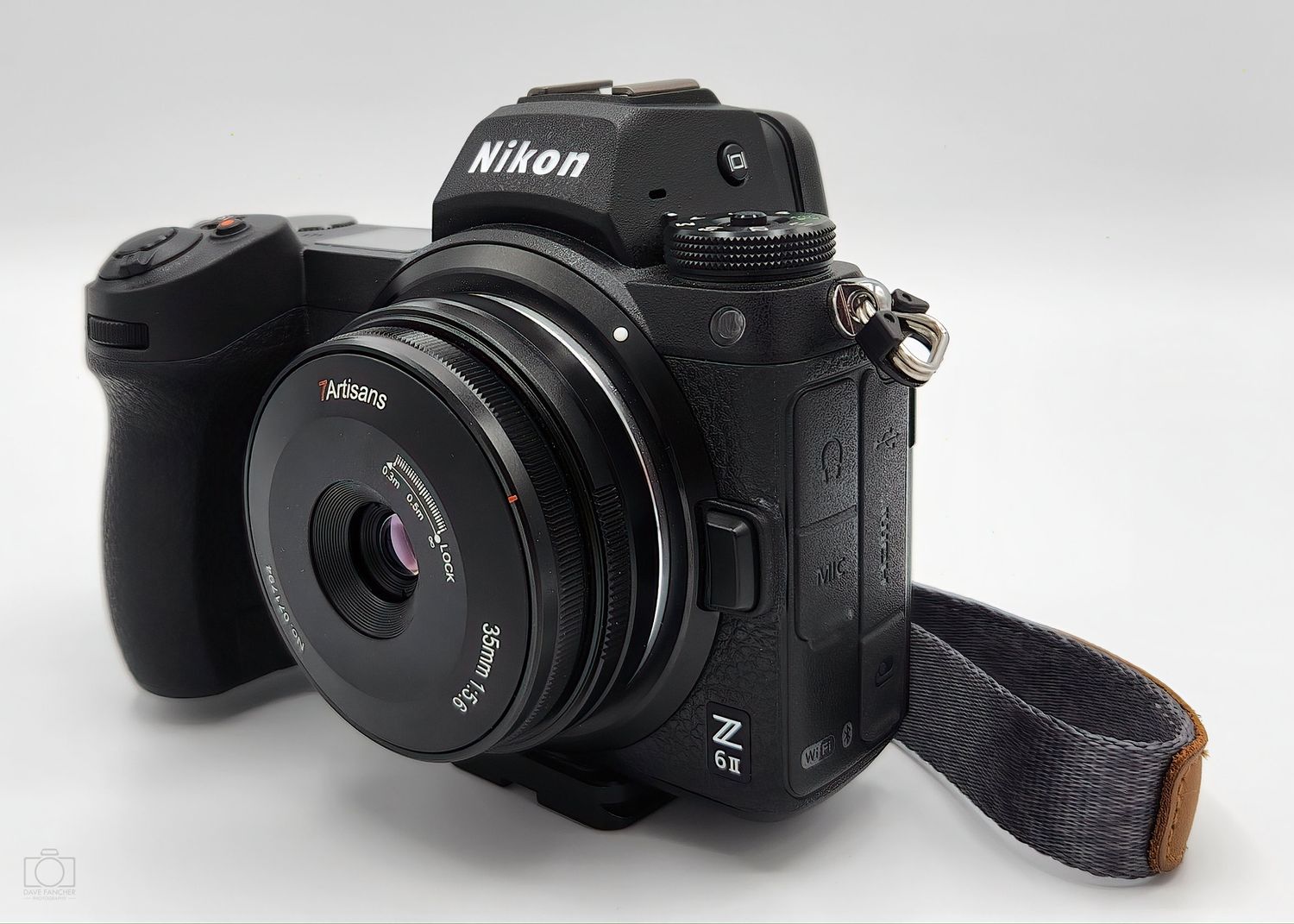
Despite its heft it's really quite comfortable when mounted on the camera body. On my Nikon Z6II it extends only as far as the grip. When shooting, I found that I liked the balance and how the camera felt in my hand with the shorter length.
As for its fit on the camera, the Z-Mount is well engineered. I've had no problem attaching or detaching the lens from the body. It really feels as secure as any NIKKOR branded lens I've used. I never worry about whether the lens will fall off or get stuck which is way more than I can say about some of the extension tubes I've tried.
The only real nitpicky complaint I have with the build quality is that I have a tendency to over-rotate the rear element cap when removing it. This really isn't much of a problem, but it does make the cap difficult to remove since the alignment has to be just right.
Versatility
Perhaps the most important thing to keep in mind about this lens is that it's a no-frills item. One shouldn't expect a lens priced at US$139 to be loaded with features. That's actually something I really like about this lens, though. It's a lens that knows exactly what it is and doesn't try to be anything else.
There are no electronics on board, so you'll be focusing manually. Want to change aperture? Too bad. It's fixed at f/5.6. You can also forget about zoom capabilities since this one is a prime.
Whether these aspects are good or bad depends on you and your needs. For me, I found that these really weren't much of a hinderance. Like with the fisheye, it does force me out of my favorite aperture-priority mode and into manual but the fact that this is a prime lens with a fixed aperture feels like the equivalent of shooting in shutter-priority mode.
The other thing this lens forces is thinking more about composition. This is all about "zooming with your feet" and considering distances between objects to better manage the depth-of-field. I've found myself moving around constantly while using this lens as I consider a wide variety of angles for some of my shots.
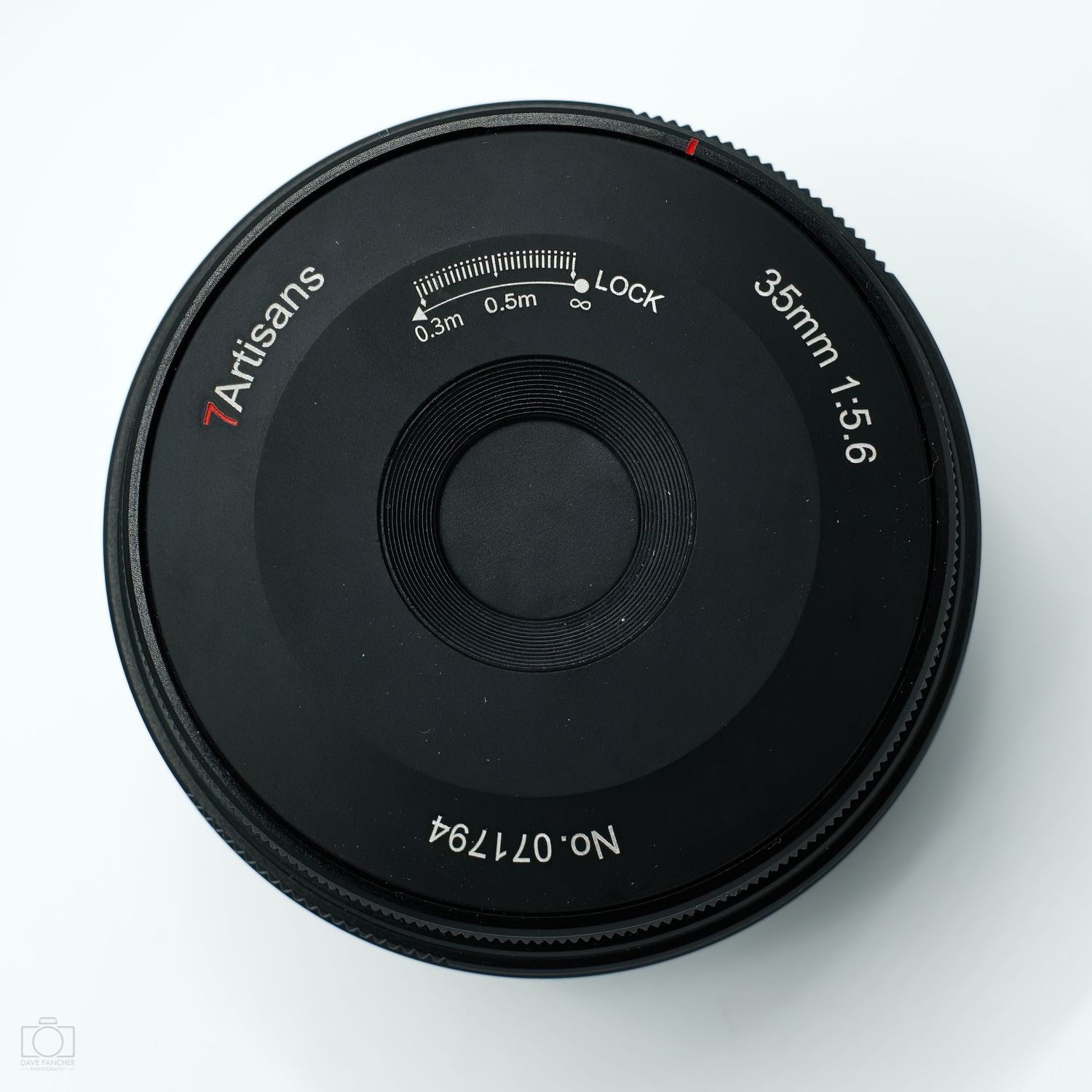
SHOOTING
On paper, shooting with this lens is essentially mount, focus, set shutter speed, shoot. In practice it's not quite that simple. To echo what most of the reviews I encountered said, the focus can be rather frustrating. I don't at all mean that images won't come out sharp, only that setting the focus can be a challenge.
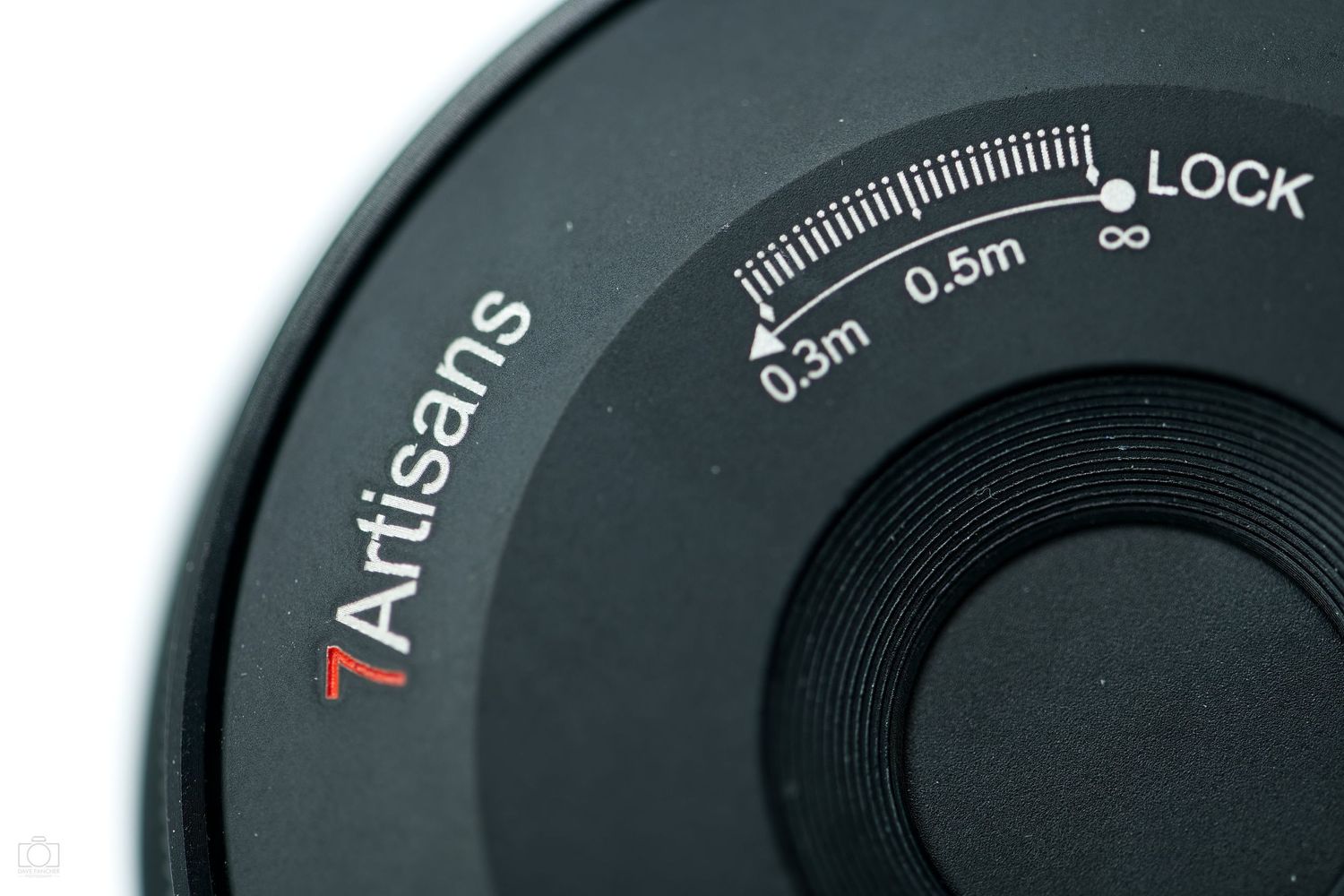
The only control on the lens is the focus dial. The focus dial serves two purposes. The first is to open and close the integrated front element cap. I really do like this design since I don't care to keep track of yet another lens cap. That said, the focus dial rotates only about 1/8 of the lens' circumference in total and nearly 1/2 of that distance is moving the lens cap. The greatly reduces the amount of rotational distance available for focusing thus making it really sensitive to even the most miniscule adjustments. Also, like other reviewers, I noticed that despite the infinity mark being at the same point as the cap lock, I had to dial the focus in about two hash marks before distant objects were in focus. Due to this and the dial's sensitivity I found myself using the live view zoom nearly 100% of the time I was adjusting focus. I also found the focus plane to be a bit narrow for my liking such that even the slightest camera movement would affect the focus, but this wasn't terribly problematic overall.
Speaking of the focus dial... It's a bit thin for my liking. The textured portion covers only about 2/3 of the dial which itself has a smaller diameter than the rest of the casing. I recognize that 7Artisans was working within some size constraints but it seems like the texture could extend to the ring's edge so it would be a bit easier to grip. Alternatively, I think it would have been neat to include the focus lever as on the Leica version of the lens. This would likely have improved the focus experience and set the lens apart in the field.
The other thing to be aware of in regard to focusing with this lens is that it's a heavy breather. The focus breathing likely won't be much of an issue for individual shots but can make focus stacking more complicated. I was rather astonished watching the breathing effect while looking through the viewfinder. Again, I don't expect much from a lens at this price point so it didn't bother me nearly as much as it would on a more expensive lens, but it is definitely something to be aware of.
Finally, other reviewers noted that they thought the "click" felt when turning the focus dial beyond the point where the cap opens or closes was too weak. I don't feel that it's too weak, at all. For me, the amount of "click" was a good balance of hard enough to notice but light enough to not be a distraction. There have definitely been a few times where I wasn't really paying attention while turning the dial and started closing the cap, but it then becomes quite obvious that the cap is closing because, well, a big section of the frame goes black! At that point it's just a careful turn back the other direction.
Image Quality
Again, given this lens' price point, I'm generally impressed with the image quality it produces although I've used it only on a few photo walks. Once the focus is set the images are really quite sharp from corner to corner. With the aperture fixed at f/5.6 there's often sufficient background blurring to separate it from the foreground while retaining enough detail to capture the environment. Foreground objects are nice and crisp.
I did notice a few, I'd call them "quirks" with the resulting images but rarely did I find anything that couldn't be addressed with a little editing magic (I use Affinity Photo for post processing). First, I found the colors to be a bit understated in my RAW files. This could be bad white balance on my part but even with some white balance adjustments I found the colors felt a bit dull. A visit to the levels panel and a few adjustments in there cleaned them up nicely.
More noticeable is the large amount of vignetting the lens produces. On most images I found a noticeable vignette effect stretching well away from the corners. In some images I actually liked it but for most I wanted it gone or reduced. In those cases I switched over to the lens profile tab in Affinity Photo's develop persona and was typically able to address it with favorable results.
Because focus can be quite difficult to set, I did notice some softness in a number of the images I captured. Sometimes some sharpening with a high pass filter was adequate but most of the time I find myself running the images through Sharpen AI from Topaz Labs. Sharpen AI does have a tendency to introduce some unwanted artifacts so you have to be careful with it, but I'm generally pleased with the results after some settings tweaks.
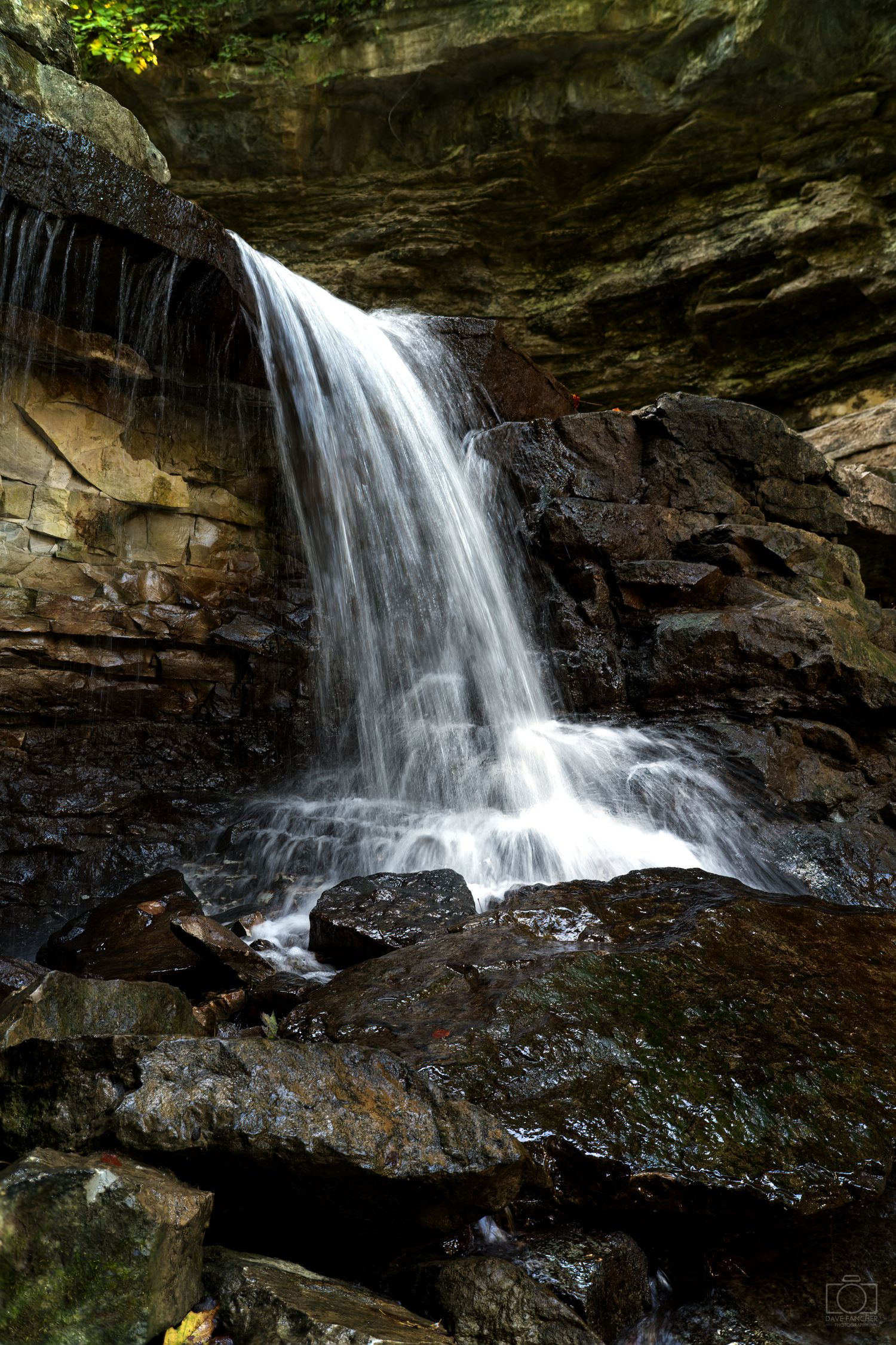
Sample Images
Below are some sample images from the lens. I've processed all of them to my normal degree but ultimately, I'm happy with the results. So far, I've taken this lens on three photo-walks through McCormick's Creek State Park (Spencer, Indiana), Metamora Indiana, and Indiana Dunes State Park (Portage, Indiana). Each trip has its own character and subjects ranging from waterfalls to old, rural buildings, to sandy beaches.
McCormick's Creek State Park
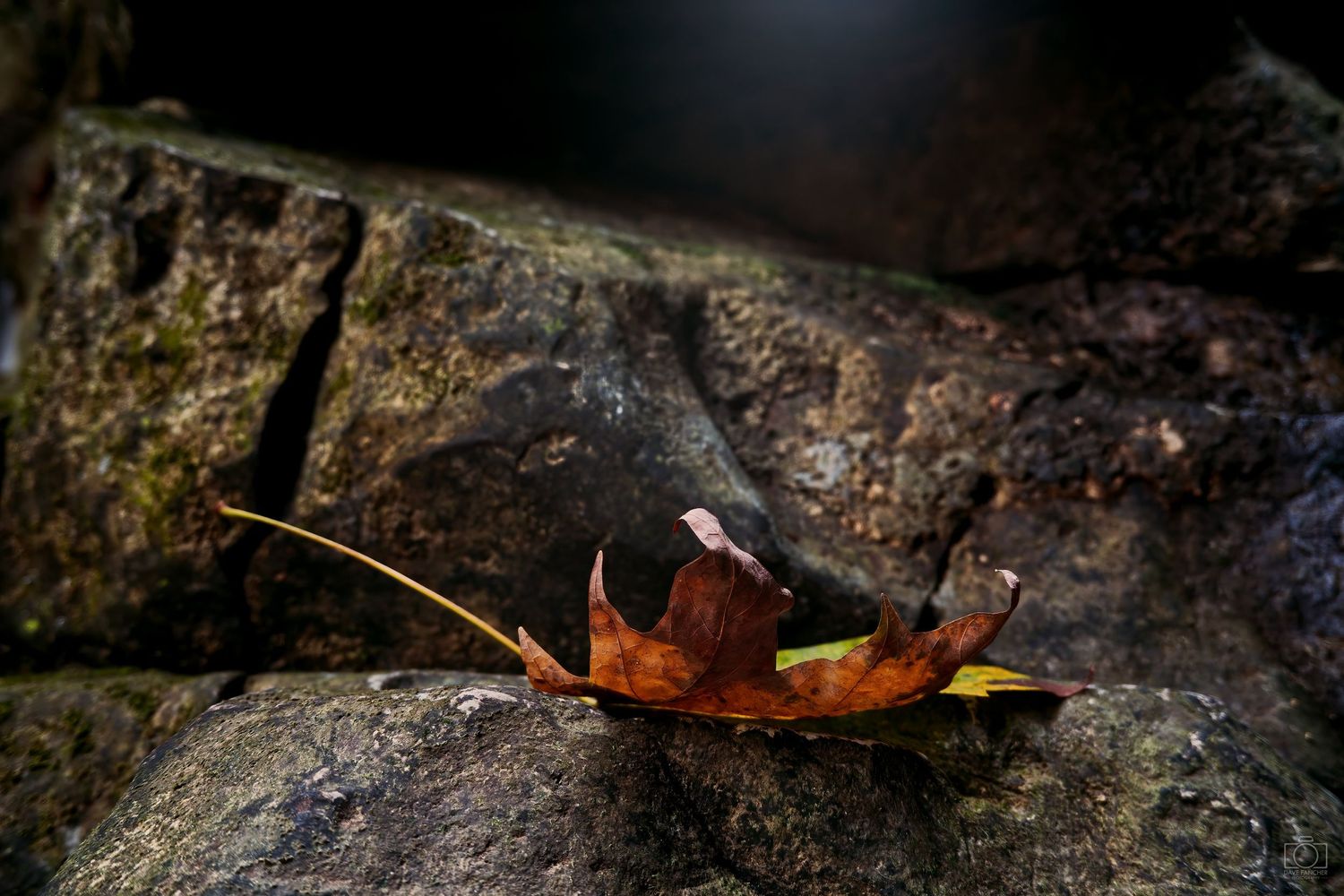
Resting
There hadn't been much rain in the region ahead of this visit, so I was able to get closer to the waterfall than usual. The light peeking over the ridge served as a beautiful spotlight on this leaf that was resting alone on a rock that's normally behind the waterfall. This particular rock was a bit over my head, so I tilted the screen, raised the camera by holding the tripod and triggering the shot with SnapBridge.
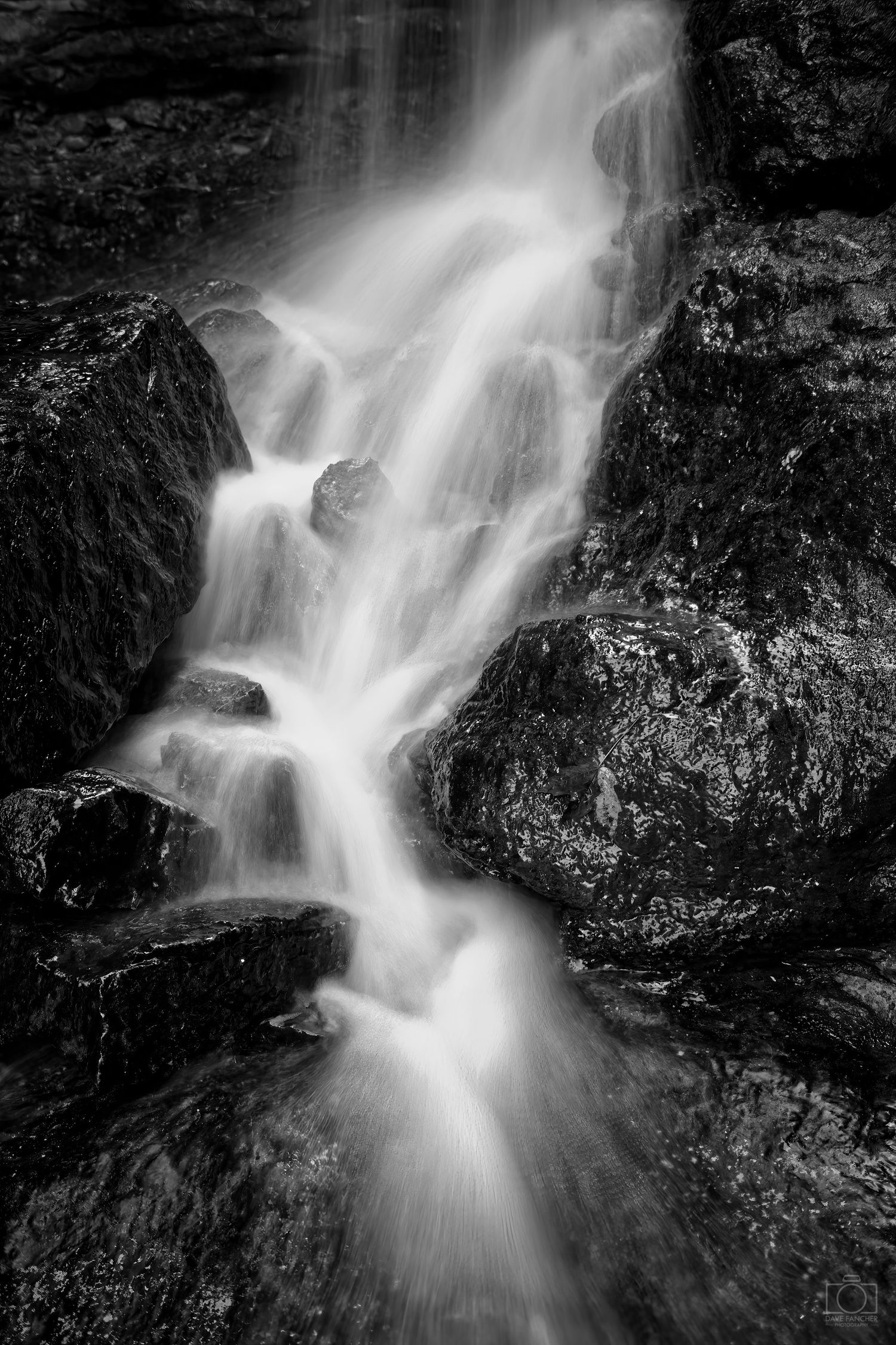
Flowing
The water rushing down the rocks really shows how they affect the flow. Normally I'd use an ND filter for something like this but for this I just dropped the ISO down as low as it would go and set the shutter speed to about 1/2 second.
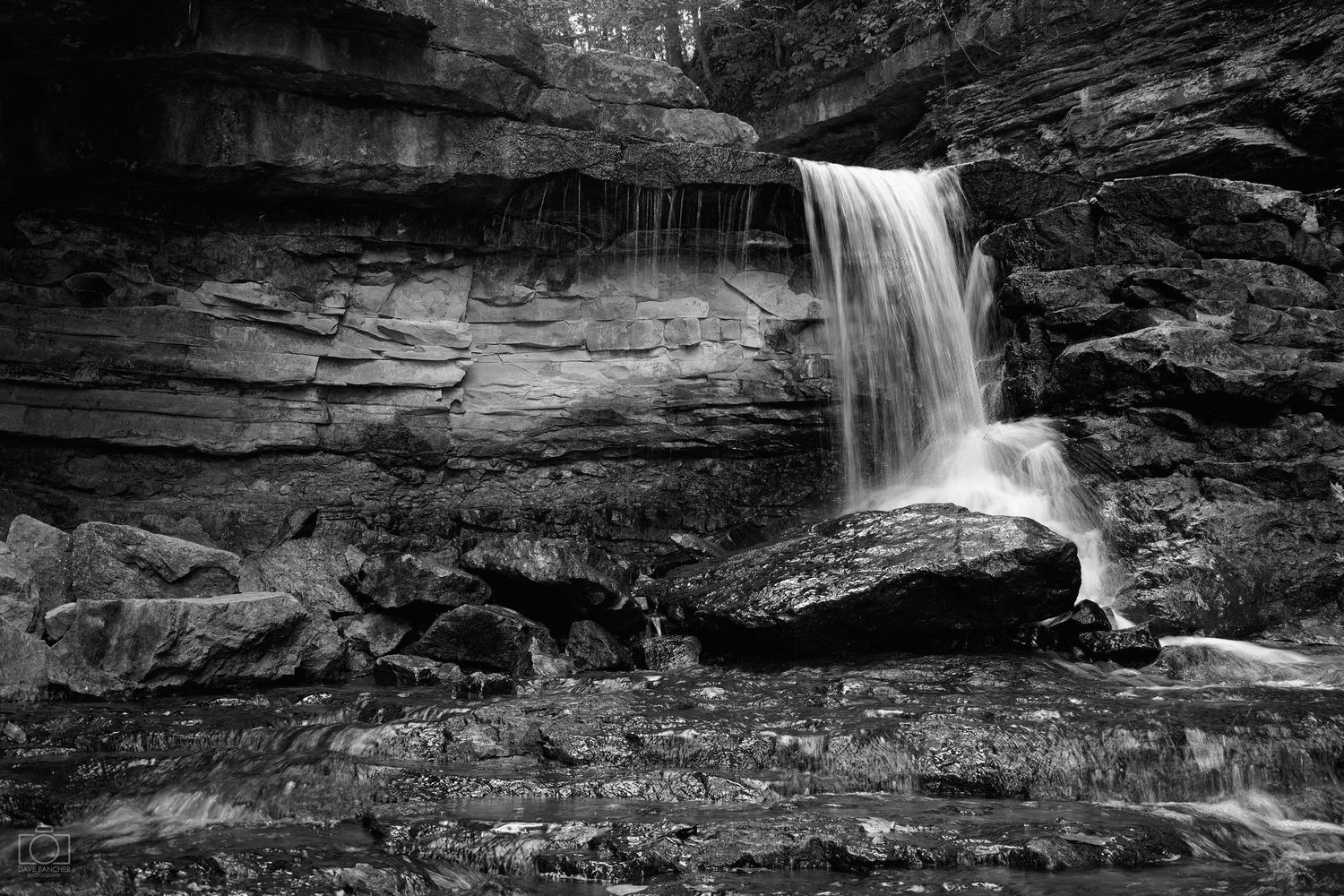
Little More Than a Trickle
Since there hadn't been much rain the waterfall was still flowing but it had slowed to little more than a trickle. That was great for me since I was able to stand in the stream and capture the water flowing gently over the rocks.
Metamora, Indiana
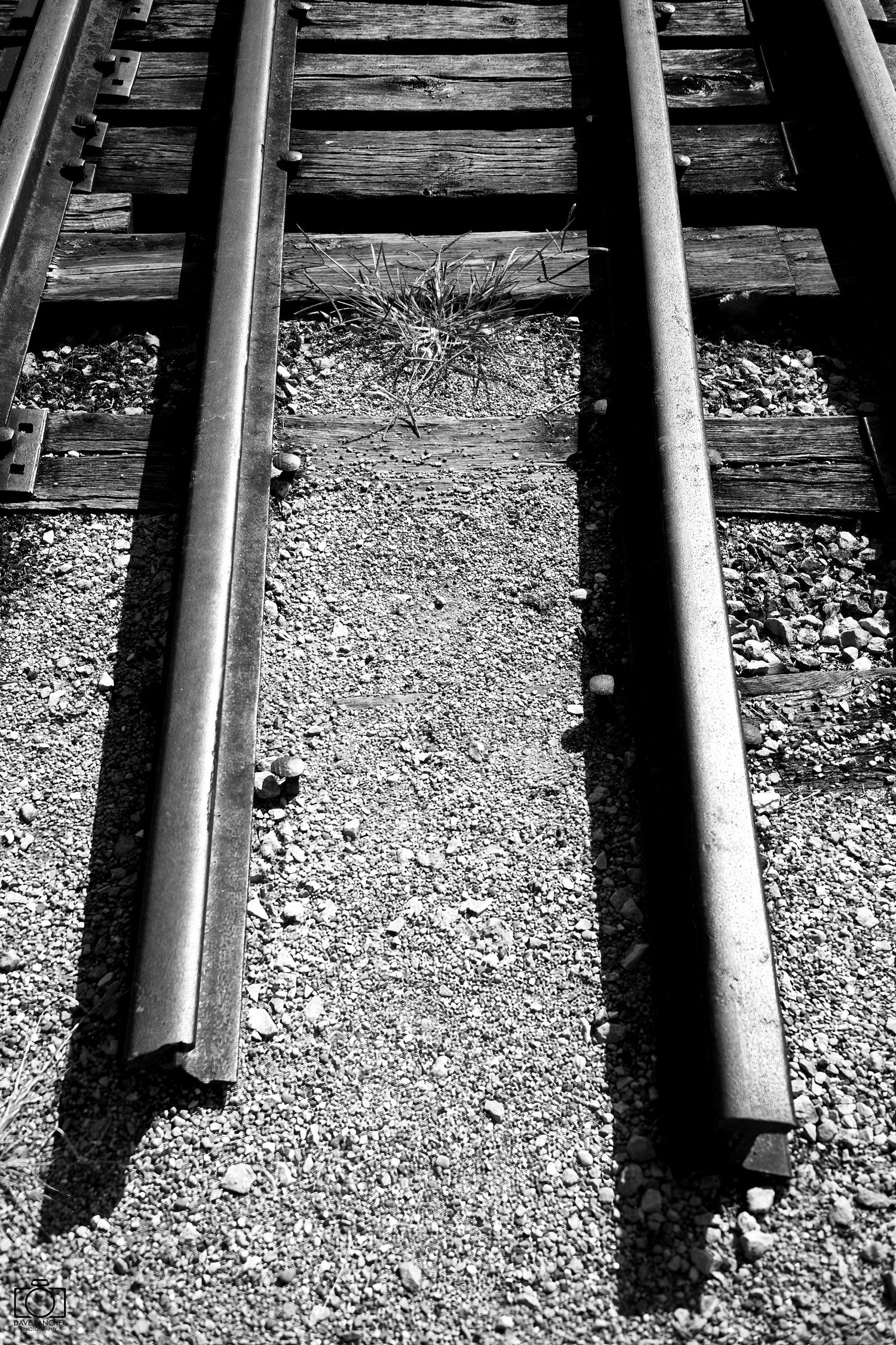
Rails
There are some railroad tracks that run alongside the canal in Metamora, Indiana. These tracks are still in service with a small train that runs back and forth between Metamora and Rushville. This section is the transition from land to a short train bridge.
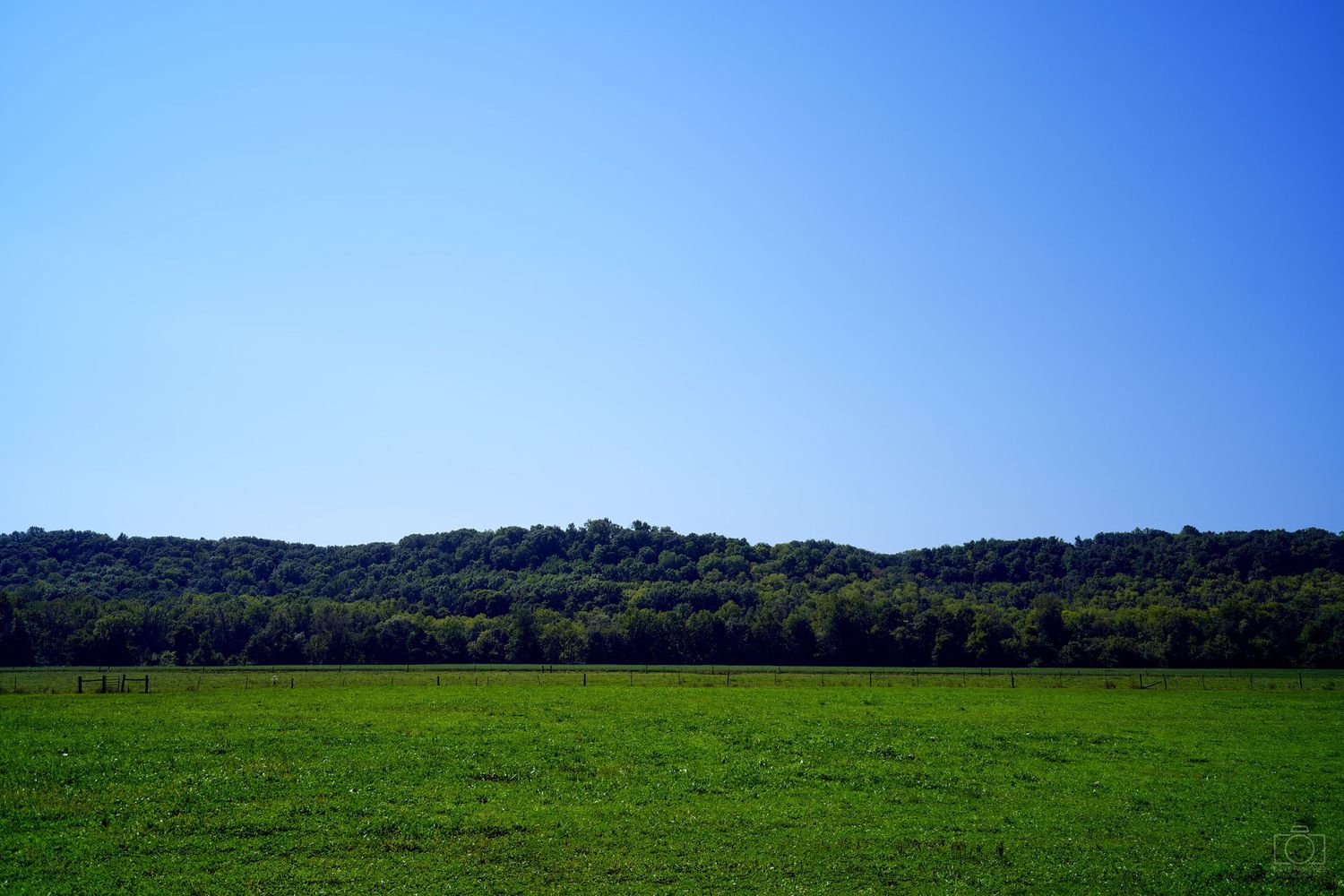
Pastures
Metamora is a very small town off the beaten path. Behind the shops on the main street are some large pastures that run up against the forest.
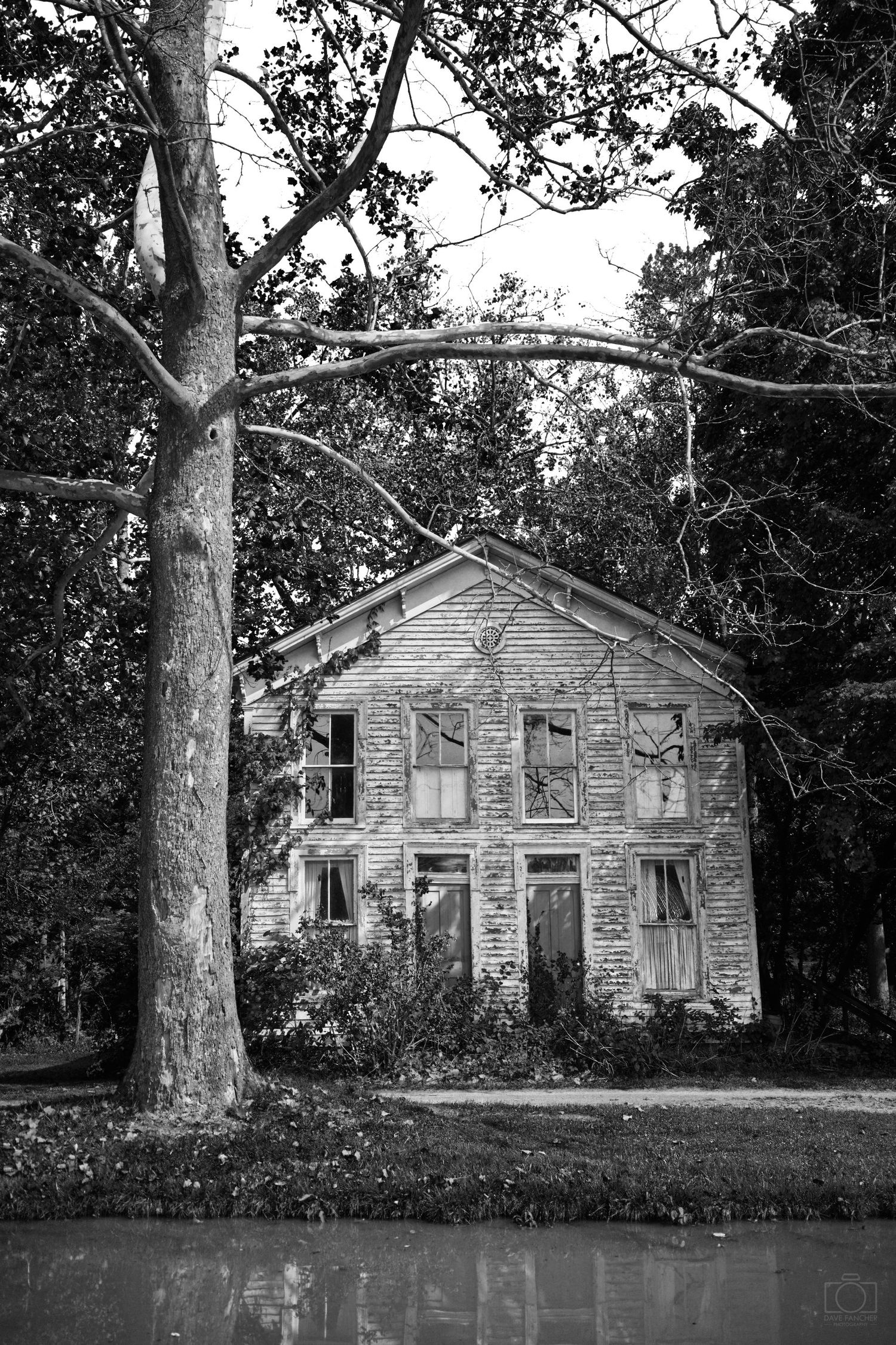
House by The Water
Just north across both the railway and canal are some houses. This one, with its peeling paint and mismatched curtains really chaotic curtains nestled behind the tree really caught my eye.
Indiana Dunes State Park
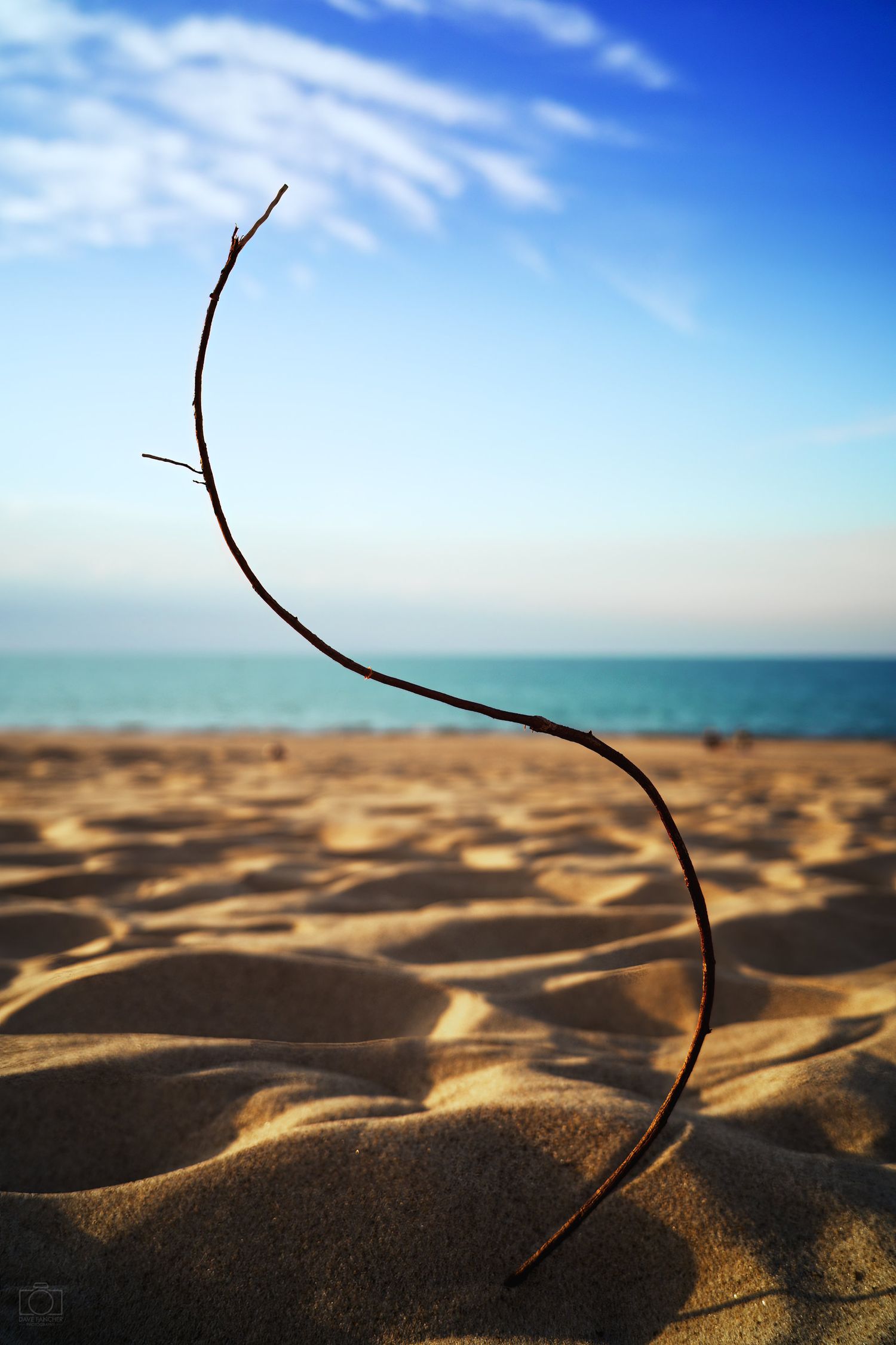
S-Curve
The sand at the dunes is really soft and, for the most part, free of debris. Occasionally something, like this winding stick, breaks up the monotony of the footprints. Here it rises alone from the sand at the base of Lake Michigan.
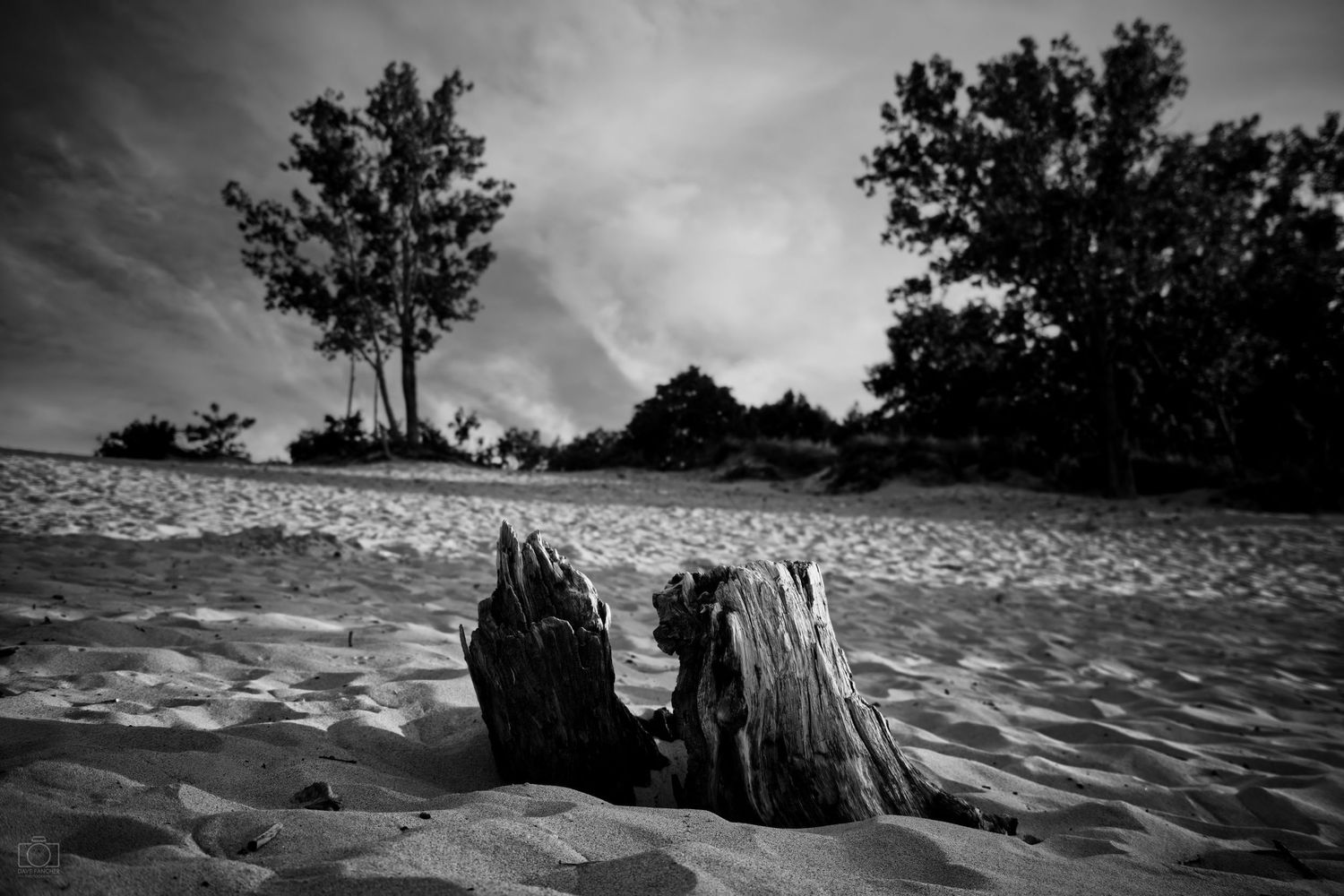
Stumped
A lone, split stump, battered by weather and time sits apart from other vegetation while the sun sets on it again.
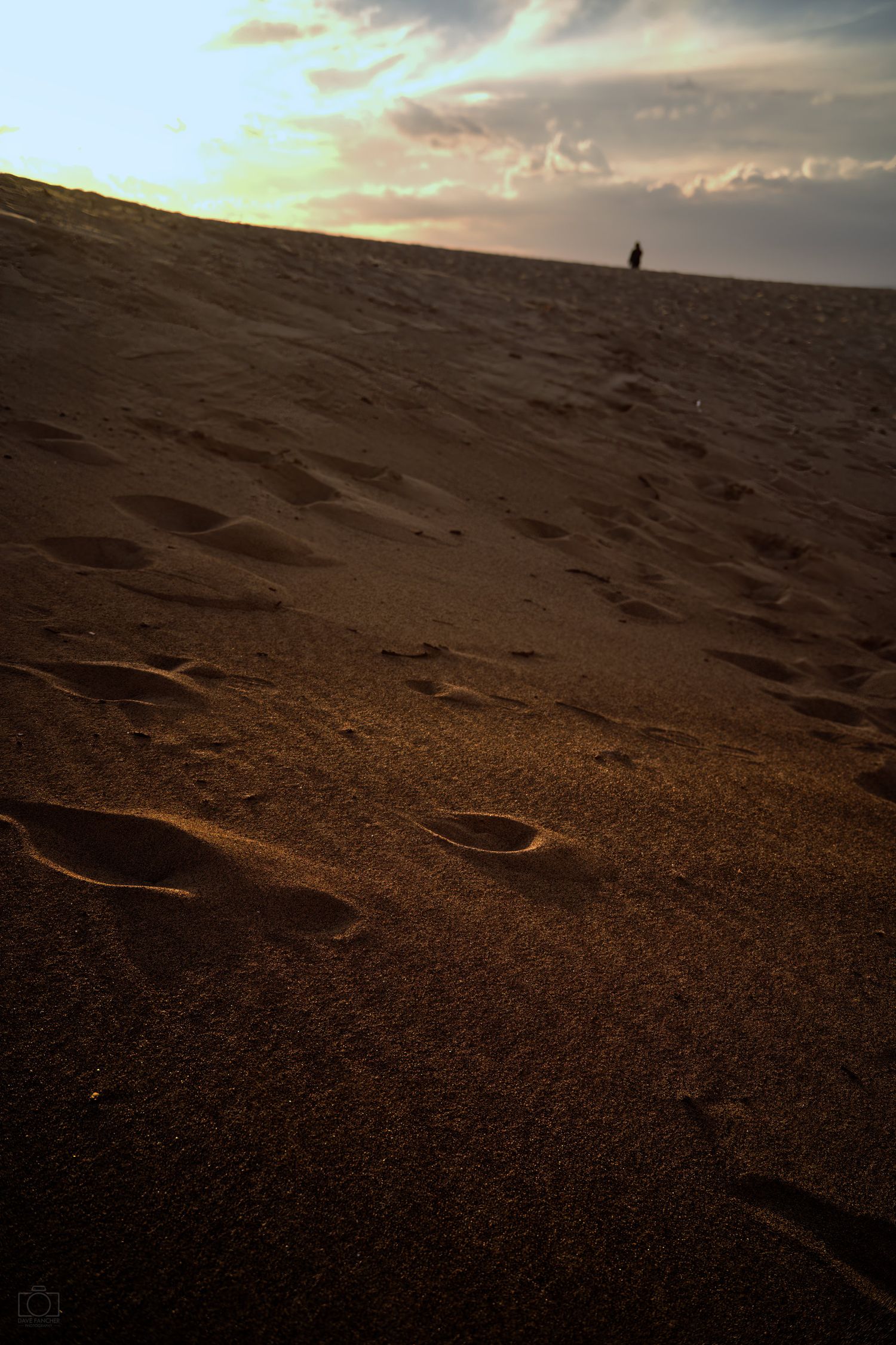
Footprints
When setting out for the dunes I'd hoped to catch some ripples in the sand. We were there late in the day so any ripples that would have been there were more than stomped over as people enjoyed the beach. As I was heading back to the car before sunset, I noticed some subtle ripples on the side of this dune. Several of the footprints are mine but I really appreciated the person standing in the distance at the end of one of the trails.
Final Thoughts
My advice for anyone considering this lens would be to go for it. Even at full price it's inexpensive enough to hopefully not cause any financial hardship, versatile enough to work in a variety of situations, and light enough to carry pretty much anywhere. I especially appreciate that it doesn't draw the attention that bigger lenses do. That said, if you want more control that focus and/or aperture, this lens probably isn't for you.