Since getting back into photography I'd wanted to add some vintage gear to my collection if for no reason other than to remember where we came from. I didn't have any particular model or even make in mind. All I really knew is that I wanted a bellows-style body. Sure, I could have found one online somewhere, but this was a great excuse to check out some antique shops!
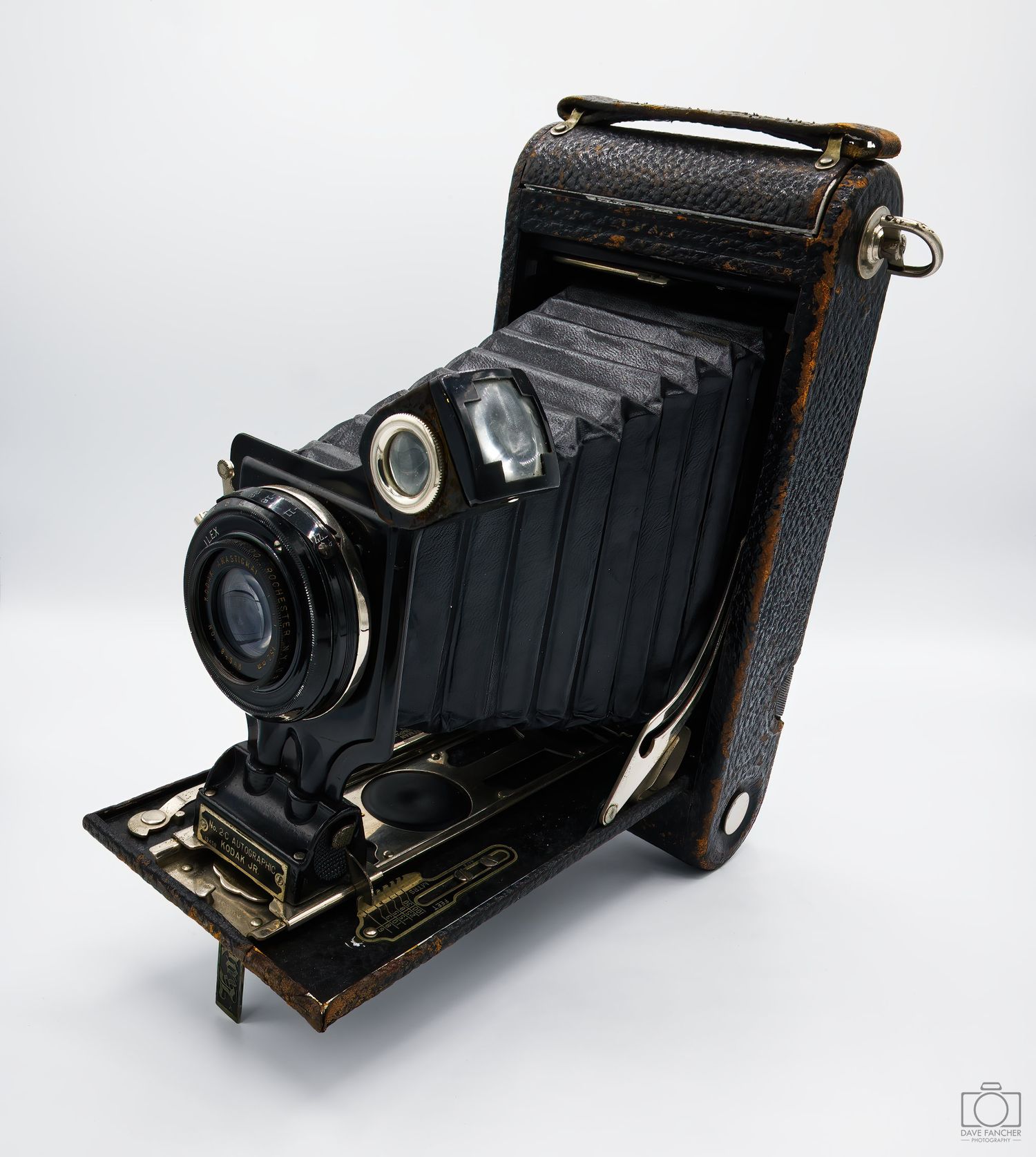
A little over a year ago I was in one such shop in Carmel, Indiana when I found exactly what I'd been looking for. Sitting in a glass case amongst an assortment of other cameras including even some glass-plate cameras was this No. 2-C Autographic Kodak Jr. that caught my eye immediately. It's a wonderful example of some of the early compact camera designs and a great reminder of what photography was over 100 years ago.
I haven't been able to find out much about this particular camera. The front plate clearly indicates the model but search results for the model all seem to depict a different camera where the viewfinder is positioned directly over the lens. What I do know about this camera is that it:
- was manufactured sometime around 1920
- accepted 130 Autographic film
- has an aperture range of f/7.7 -f/45
- can do timed exposures
- has a bulb mode
- focuses by moving the bellows to predetermined range slots
Unfortunately, the film isn't made anymore but I was able to find a 3D printed adapter which allows it to accept 120 film which I have loaded into it. What I haven't yet done is try actually shooting with it! I do plan on doing that soon and will post the results of that experiment once the film is developed.
Ever since I bought the camera I've wanted to photograph it and some of its more interesting features. Over a year has passed but after getting a lightbox I thought this would be the perfect subject to experiment with. The images I captured in the lightbox follow below. (In other news, I really like the new lightbox!)
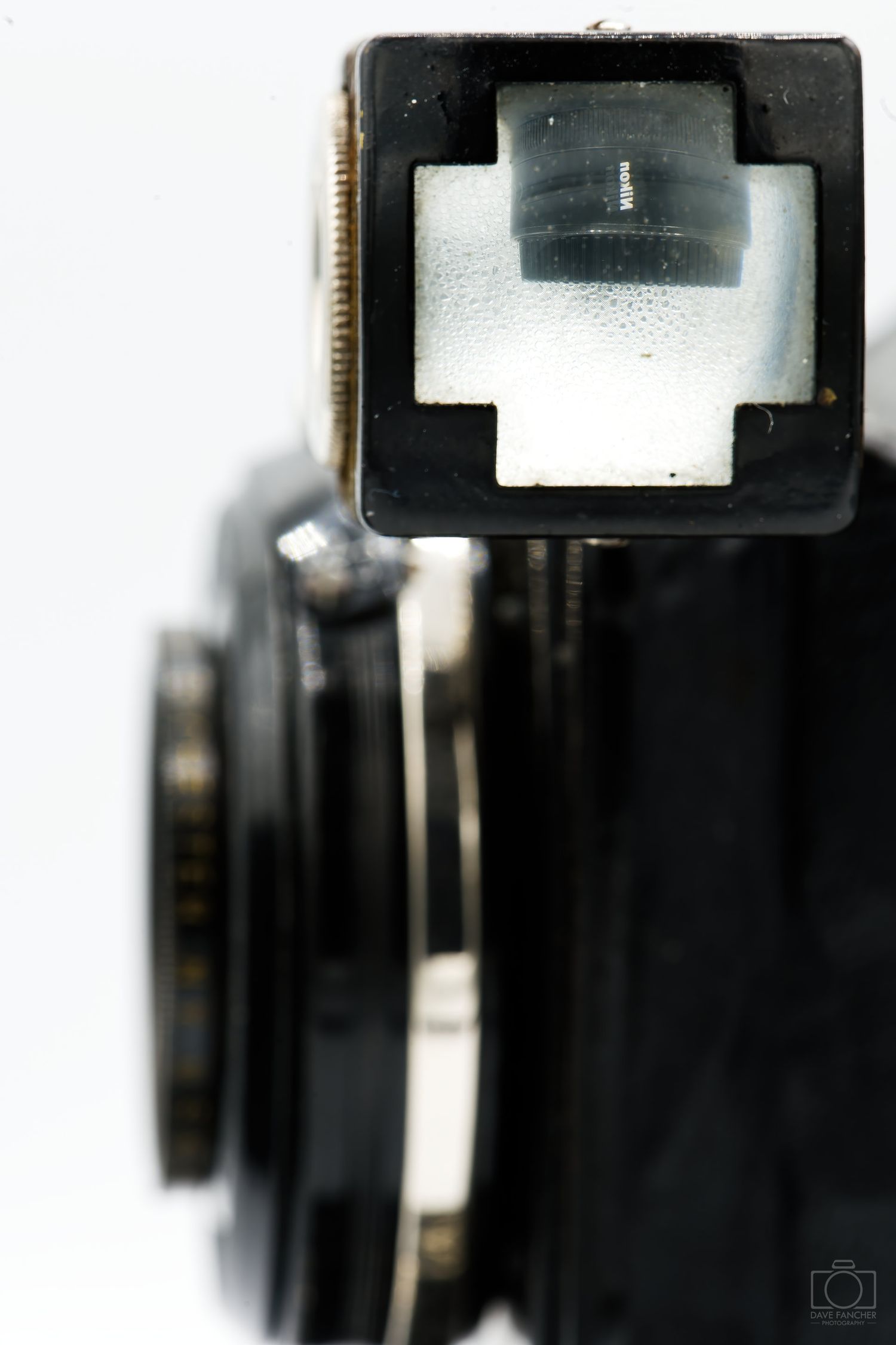
The viewfinder seems to have a bit of moisture in it but it still does an adequate job of showing what the camera is pointed at. Here it's looking at my Nikkor Z 24-70mm f/2.8..
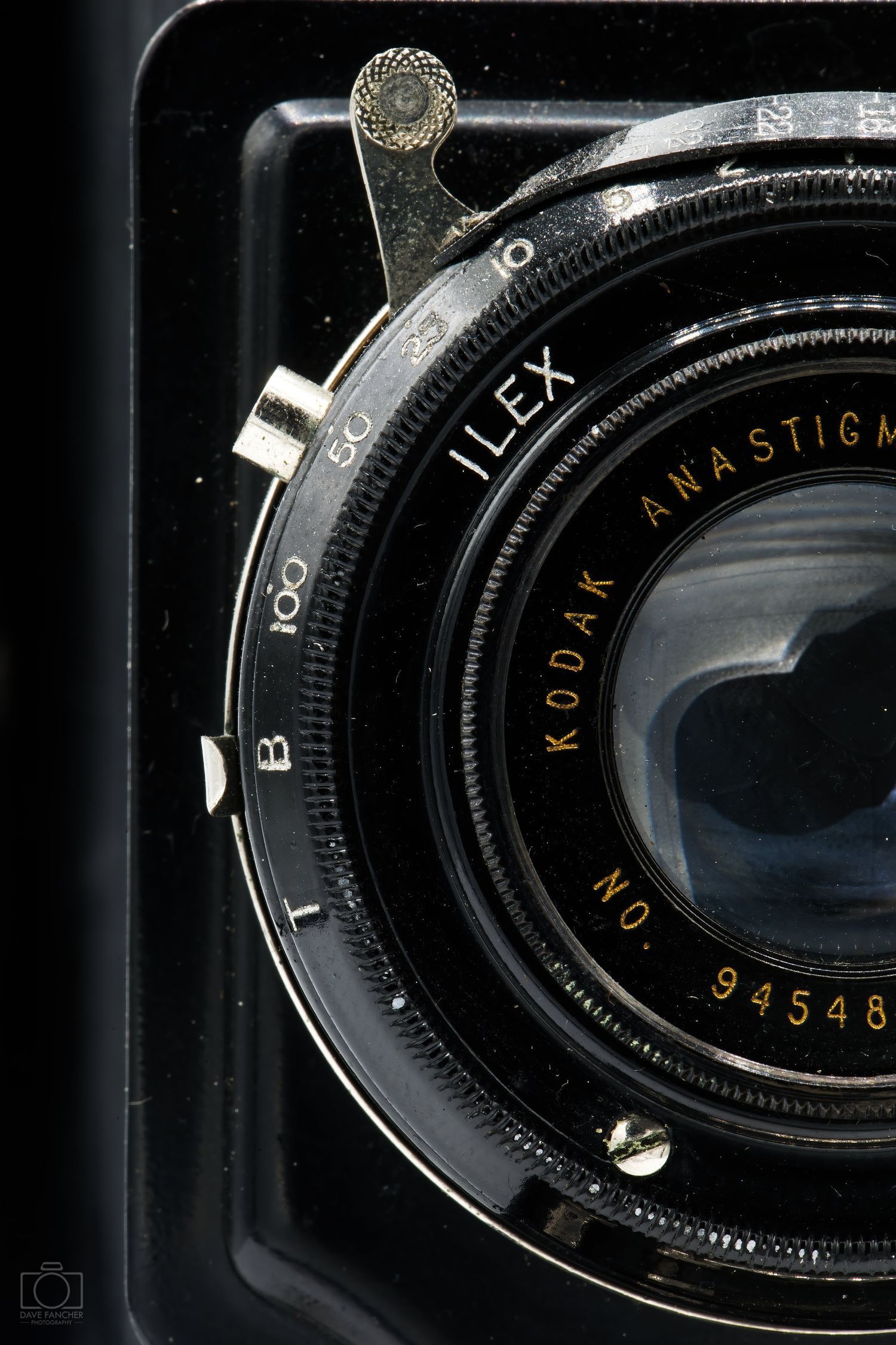
I love this straight-on view of the lens and shutter mechanism.
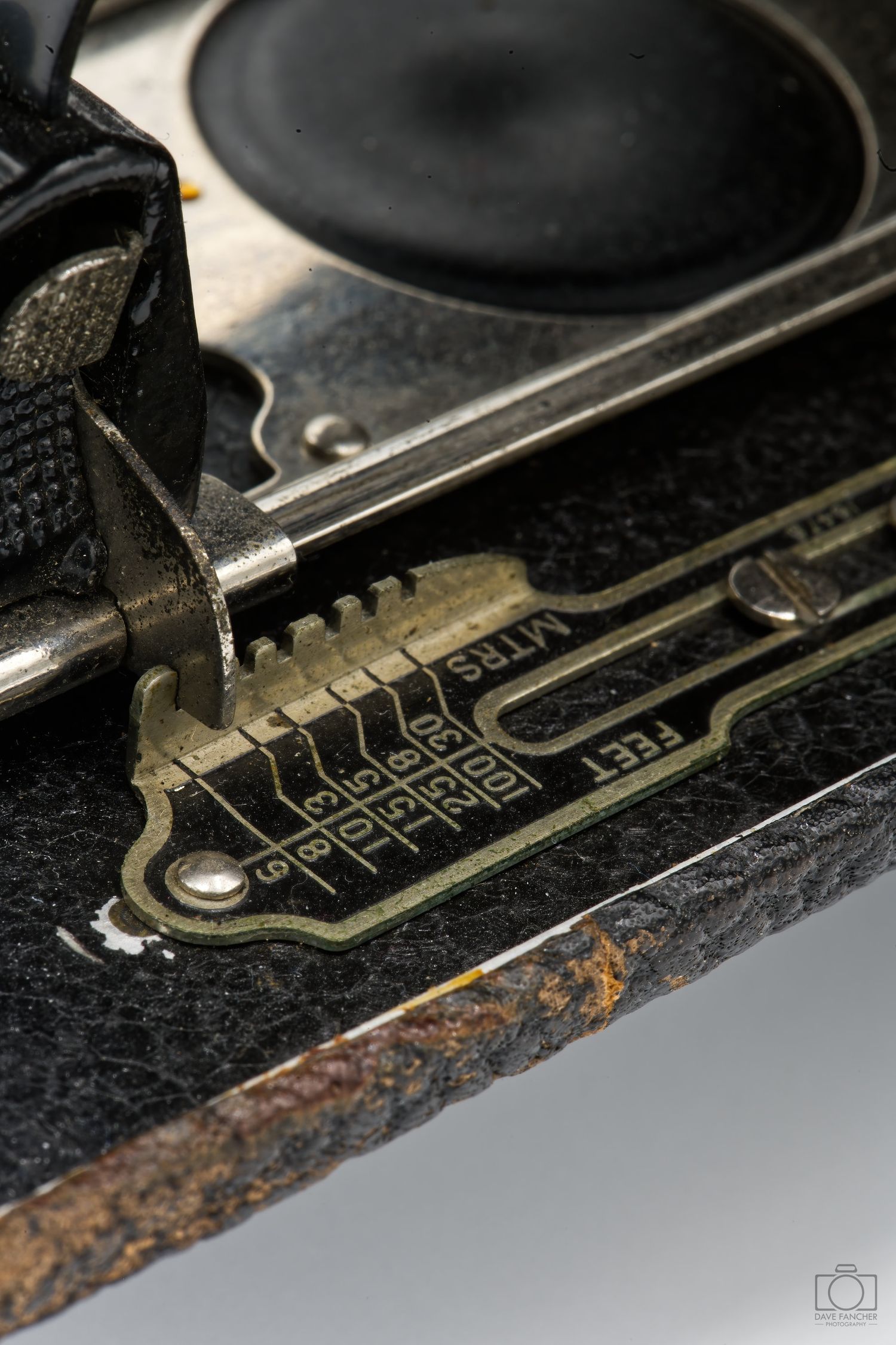
Focusing this old camera consists of hooking the plate from the bellows carriage into one of the labelled notches on the focus range plate.
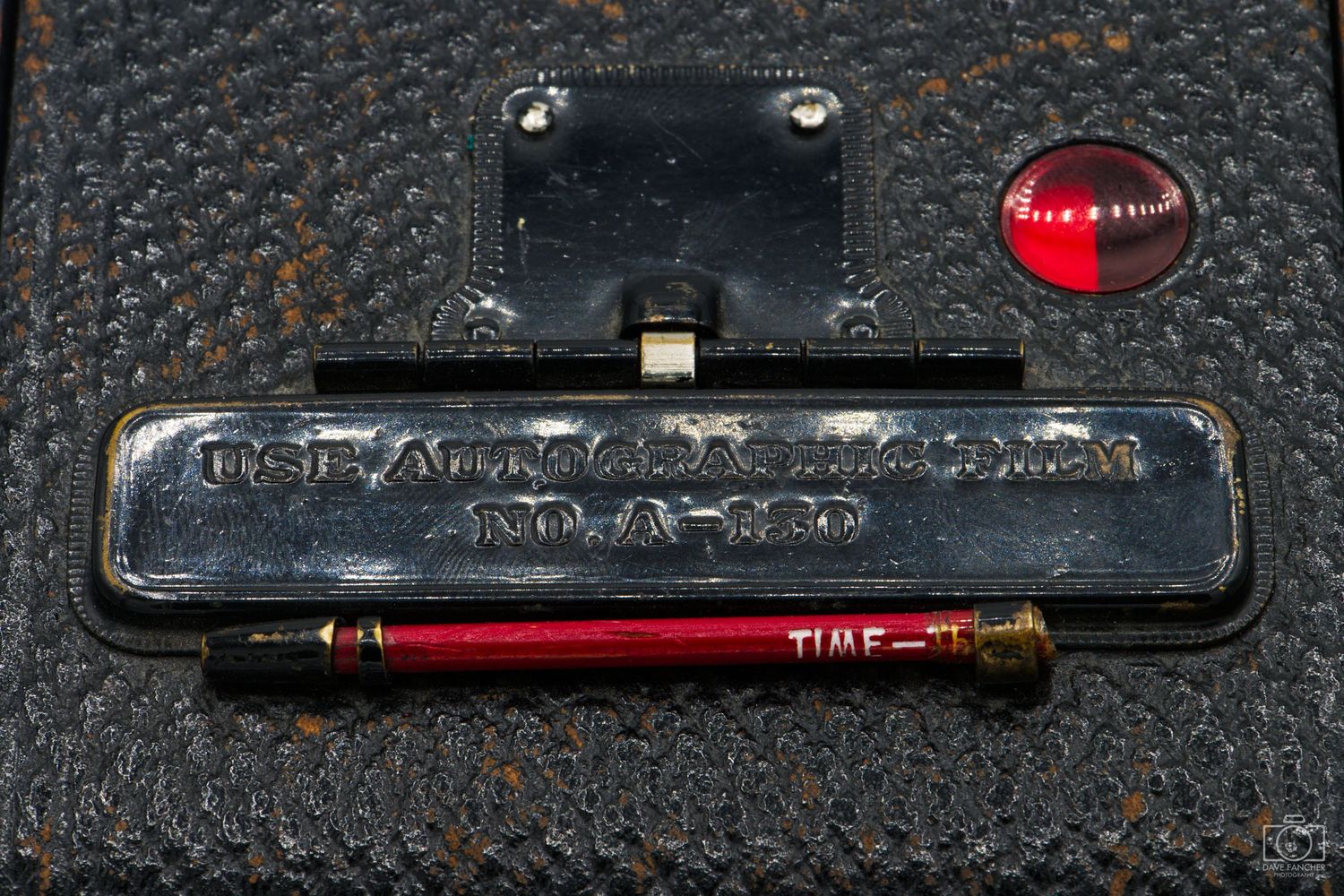
One of the most interesting aspects of this camera was the film. This panel on the housing flips open, allowing the photographer to label each exposure provided that the Autographic film was being used. Another nice feature is the little red window which would show which served as both a guide for advancing the film and an exposure counter.
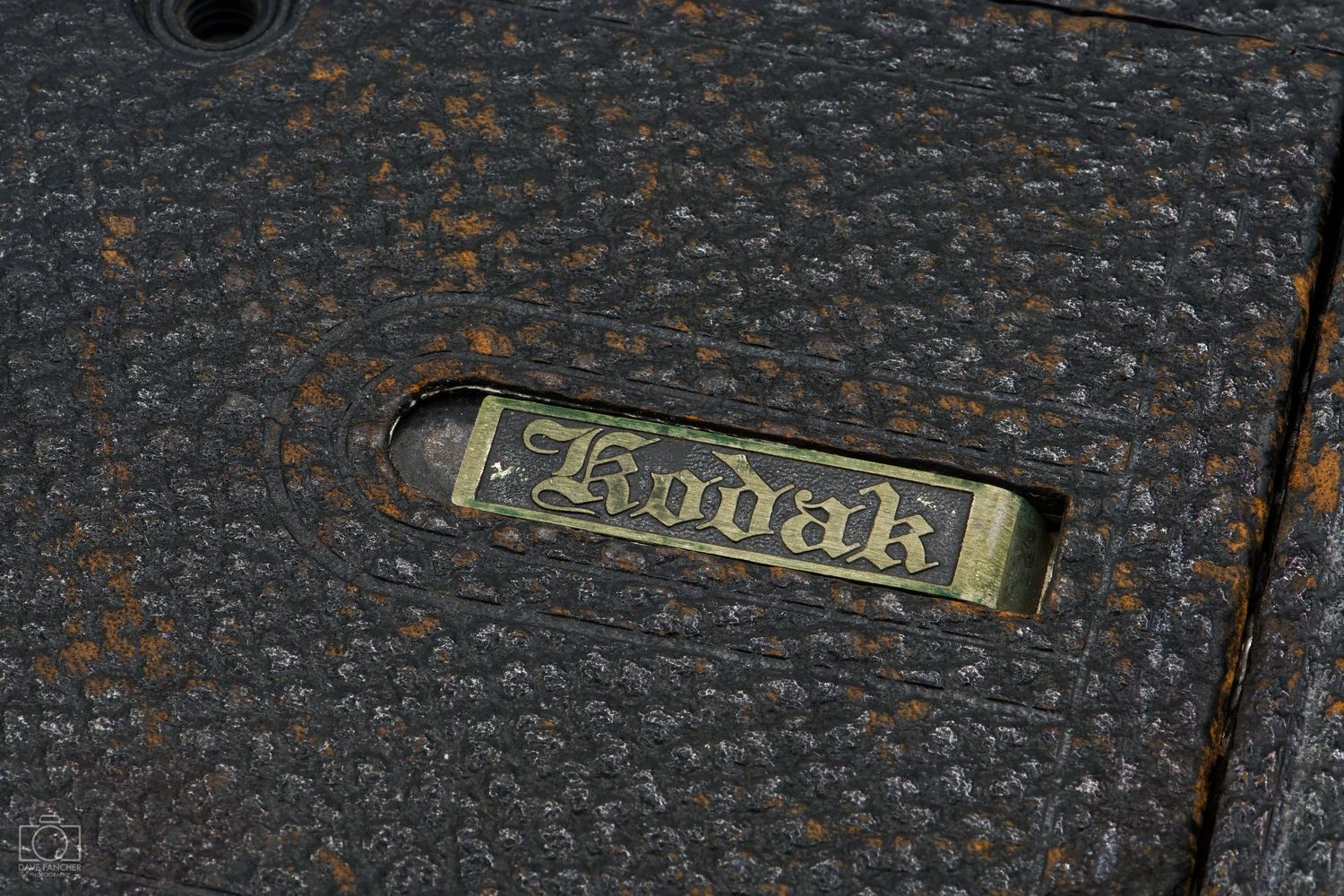
The Kodak label serves as a kickstand to keep the camera level when open and set on a table. Alternatively, it has a threaded hole allowing the camera to be tripod mounted.